What is AKASI?
AKASI, a new scoring system in AK
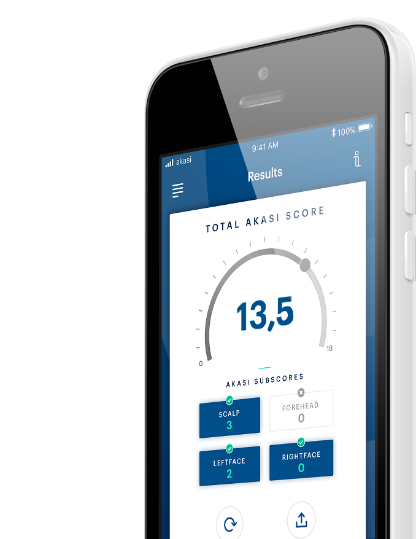
AKASI is a medical device intended for use by healthcare professionals to assess AK severity on the head.
AKASI = Actinic Keratosis Area and Severity Index
This scoring system is designed to quantitatively evaluate the severity of AK on the head.
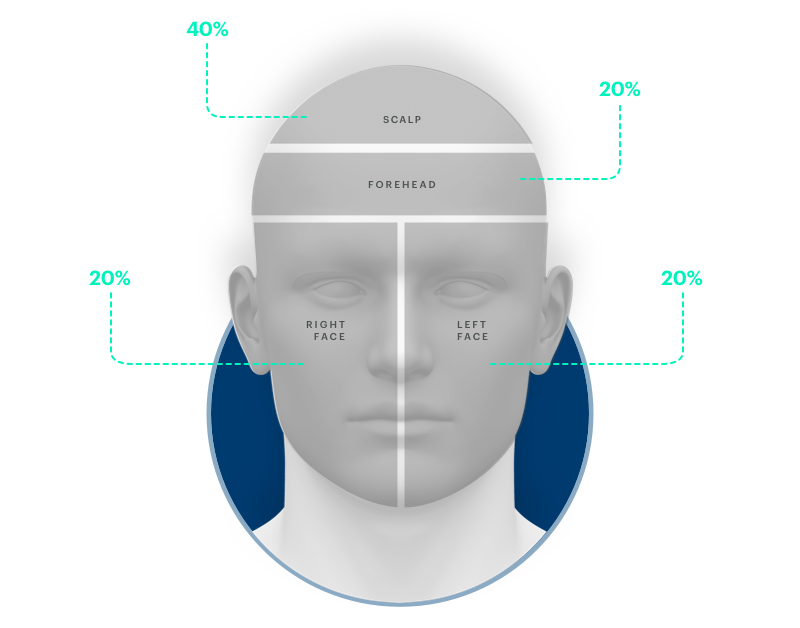
To determine the AKASI score, the head is divided into four areas: scalp, forehead, left and right face.
In each region, the percentage of the area affected by AK, the distribution of AKs, the intensity of erythema and the degree of thickness of the worst visible AK are estimated and scored accordingly.
The sum of the four scores is multiplied by the area coefficient to obtain a subscore for each area of the head.

Calculation method
How to grade parameters
-
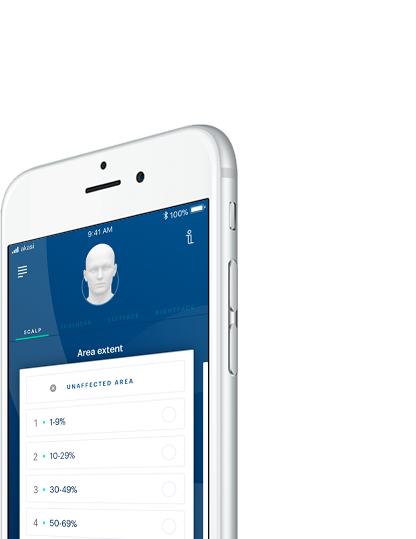
Area extent
- Unaffected area
- 1 1-9%
- 2 10-29%
- 3 30-49%
- 4 50-69%
- 5 70-89%
- 6 90-100%
-
AK Distribution
- 0 None
- 1 Isolated or scattered
- 2 Clustered
- 3 Clustered and confluent
- 4 All confluent
-
Erythema
- 0 None
- 1 Slight
- 2 Moderate
- 3 Intense
- 4 Very intense
-
Thickness
- 0 No palpability
- 1 Just palpable
- 2 Clearly palpable
- 3 Thickened
- 4 Very thickened
Throughout the calculation process, you can access this information through the i button (on the top right side).
AKASI in real practice
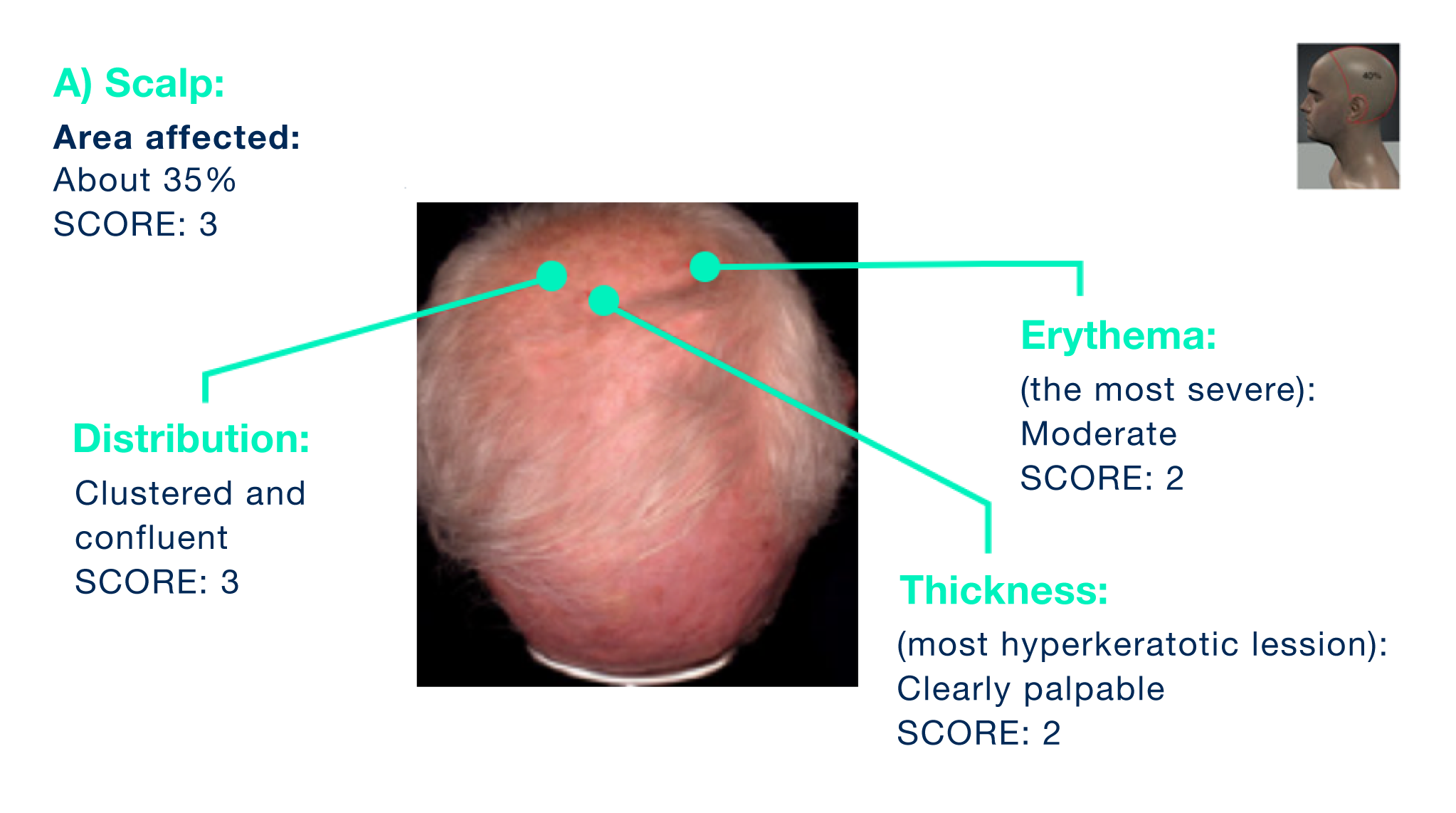
To better understand how to implement AKASI in a real setting, a clinical case is illustrated.
Tips before getting started!
- If Squamous Cell Carcinoma (SCC) or Basal Cell Carcinoma (BCC) is present, this is not included in the AKASI evaluation.
- Sandpaper-like texture should be included in the estimation of area affected. Also include areas covered by hairs into your estimation (e.g. if the scalp is fully covered by hairs there is often no actinic keratotic damage – area score for scalp in this case is 0).
- When grading distribution, assign a score for the worst affected region of the area.
- When grading erythema and thickness, assign a score for the worst affected lesion of the area.
- Only evaluate erythema related to AK ; exclude erythema related to other dermatological conditions such as rosacea.
- Thickness is based on touch .
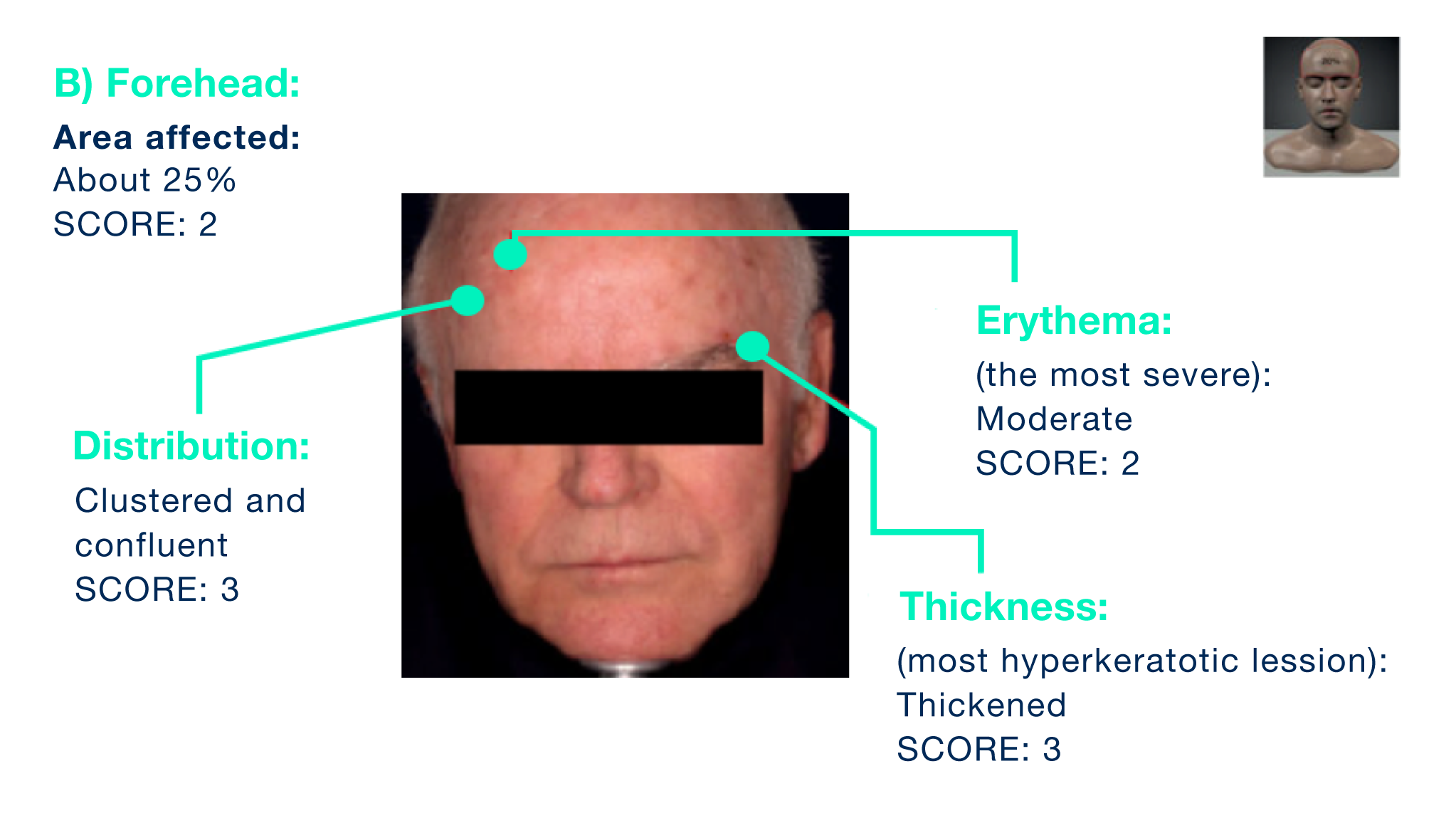
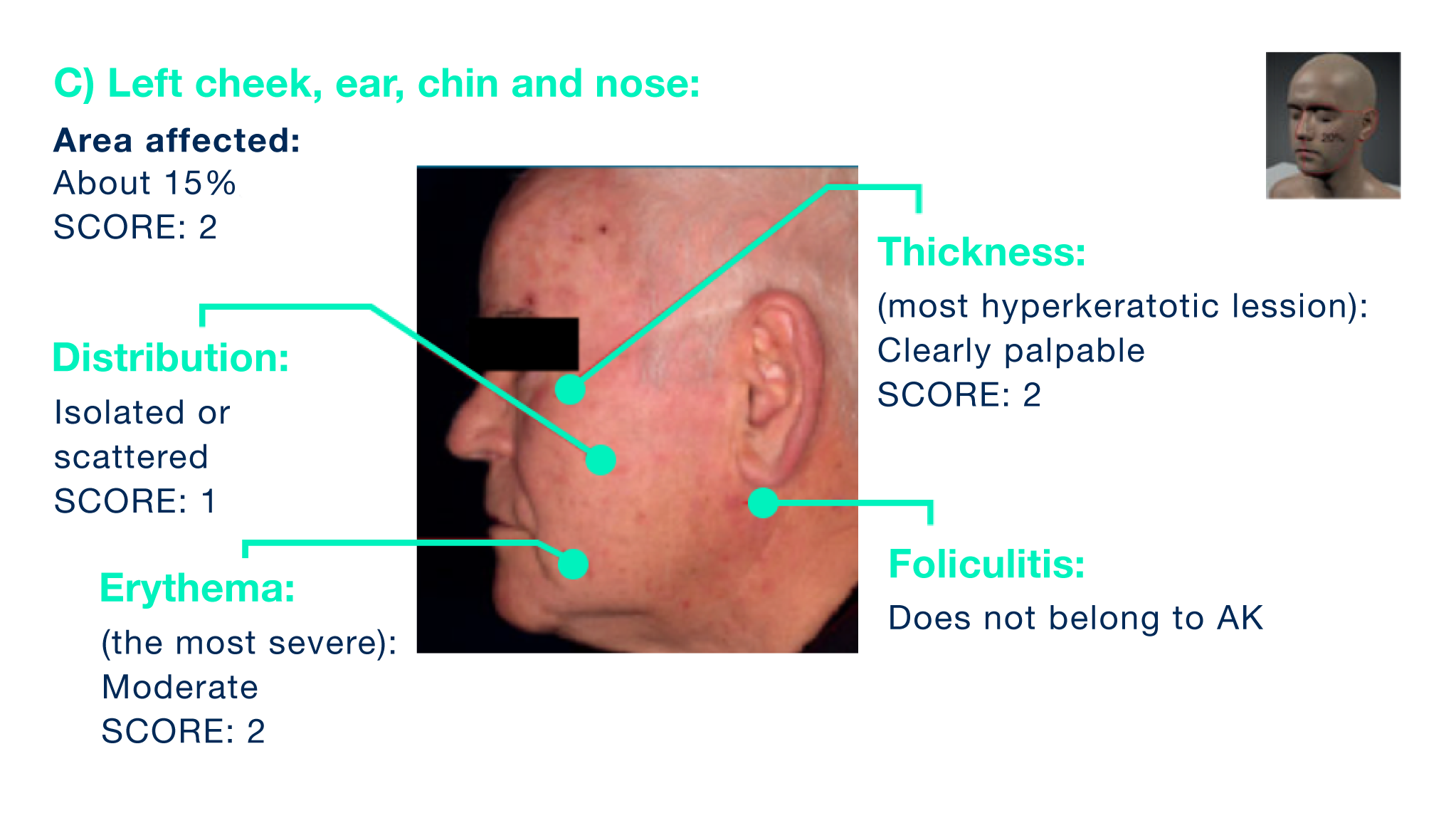
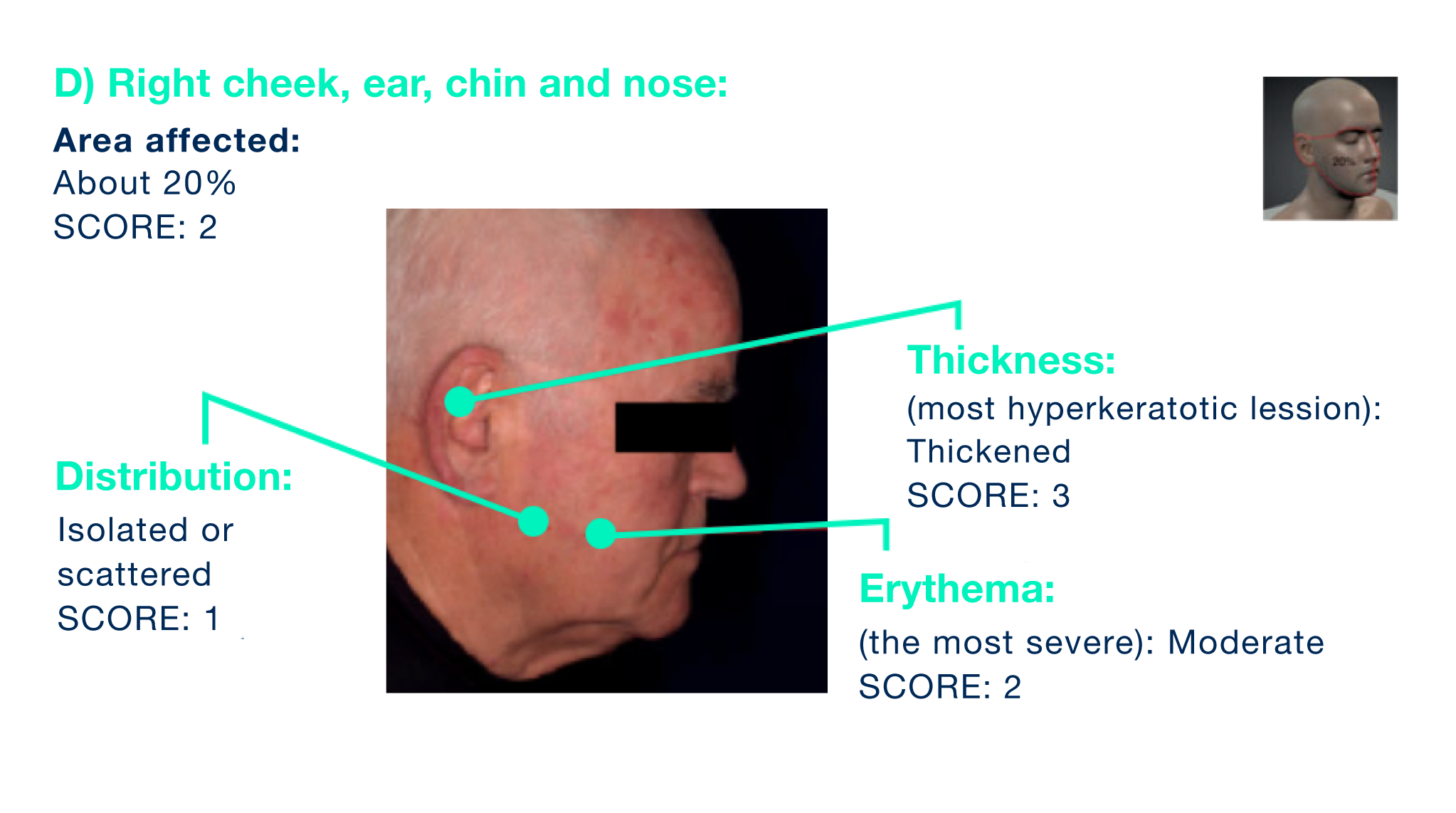
| Score | Scalp | Forehead | Left cheek, ear, chin and nose | Right cheek, ear, chin and nose |
|---|---|---|---|---|
| D (Distribution) | 3 | 3 | 1 | 1 |
| E (Erythema) | 2 | 2 | 2 | 2 |
| T (Thickness) | 2 | 3 | 2 | 2 |
| Sum of D + E + T | 7 | 8 | 5 | 6 |
| % of affected area | 35% | 25% | 15% | 20% |
| Area score | 3 | 2 | 2 | 2 |
| Subtotal (Sum of D + E + T + Area score) | 10 | 10 | 7 | 8 |
| Area coefficient | x0.4 | x0.2 | x0.2 | x0.2 |
| AKASI Subscore | 4.0 | 2.0 | 1.4 | 1.6 |
| Total AKASI Score | 9.0 |
AVAILABLE ON iOS AND ANDROID
Download the
AKASI App now
Discover all the features and get a better user experience in our app.